Algorithms vs. Peers in Shaping Engagement with Novel Information
2nd Round Major Revision at Information Systems Research
Abstract
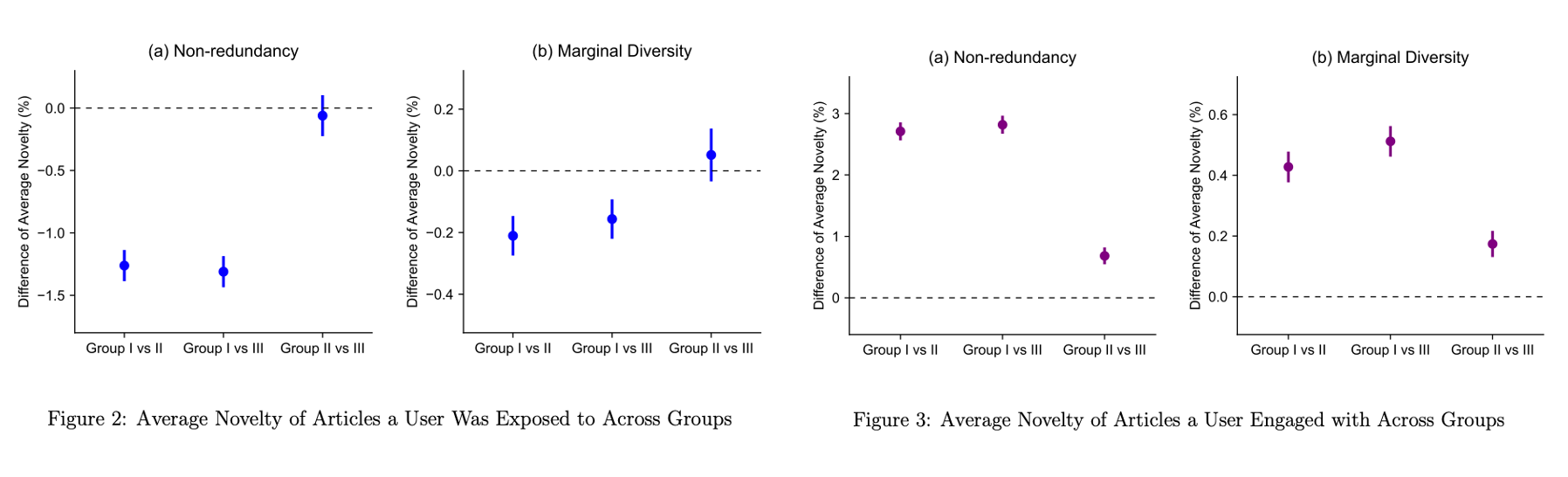
Online information acquisition relies on content recommendation, with algorithmic curation and peer sharing serving as the two principal delivery channels. Leveraging a two-week, large-scale randomized field experiment with over 2.1 million users on WeChat—a leading social and content platform—this study provides some of the first causal evidence on how these two channels differentially shape users’ exposure to, and engagement with, novel information, disentangling the content contrast between channels from the social cues unique to peer sharing. We document an exposure–engagement asymmetry: peer sharing exposes users to more novel information, yet algorithmic curation generates greater engagement with novel information—even when peer sharing displays friends’ endorsements. Conditional on exposure, users are generally less likely to engage with more novel information; this novelty penalty, however, is significantly weaker under algorithmic curation and, to a smaller extent, under visible social cues. Algorithms act as relevance-calibrated filters, surfacing novel content with greater broad appeal and stronger fit to users similar to the recipient. At the collective level, however, algorithmic curation circulates a substantially narrower set of distinct articles than peer sharing. Our findings refine the filter-bubble debate—algorithms constrain novelty at exposure yet promote engagement with it—and offer guidance for designing recommendation systems that balance individual discovery with collective information breadth.